“insect pests” search results (400)

Introduction to the quality of Kenyan coffee varieties different from bourbon beans in Central and South America
Different from bourbon beans in Central and South America. This Kenyan native species was created by Scott Laboratories in 1930, known as SL for short. Agronomists wanted to find a kind of bourbon with high yield and resistance to diseases and insect pests, and obtained SL28 through experiments. SL28 is a genetic variant with a mixed pedigree of French missionaries, mochas and Yemens Tibica, which was originally cultivated for SL28.
2016-06-30 Different from Central and South American bourbon Kenya coffee variety quality type introduction
Boutique coffee specialty coffee coffee bean variety
Abstract: coffee trees are generally divided into three categories: Arabica species, Robesta species and Liberika species. With regard to the cultivation of crops, seed selection is a very important factor. Every year, agronomists are studying higher quality and higher yield varieties of wheat, soybeans and corn, as well as how to make apples more delicious, beautiful and resistant to diseases and insect pests. in fact, the same is true of coffee.
2016-05-04 Boutique coffee specialty coffee beans varieties
Strong Java Coffee Flavor description method introduction to the price of high-quality coffee beans
Java produces only a small amount of Arabica beans, most of which were imported from Africa after the rust disaster. This coffee has a strong bitter taste after roasting, but the aroma is extremely light. Although the acidity is low and the taste is delicate, it is rarely used for direct drinking. It is often used to mix mixed coffee or to make instant coffee. Diseases and insect pests are really a powerful thing, it makes Pakistan
2016-10-13 Taste strong Java coffee flavor description processing price boutique coffee beans
Costa Rica urgently needs to stimulate the coffee industry
Due to the decline in coffee prices on the international market, Costa Rican coffee exports totaled US $306 million in 2015, down 26% from US $412 million in 2012, Costa Rica reported on May 12. In the first quarter of 2016, the average world price of coffee was $1.14 per liter, down 26 per cent from the same period in 2014. Affected by climate change and diseases and insect pests at the same time, the coffee growing area of Colombia
2016-08-25 Costa Rica in urgent need stimulation coffee farming national newspaper 5
Costa Rica stimulates the main force of the coffee market
Due to the decline in coffee prices on the international market, Costa Rican coffee exports totaled US $306 million in 2015, down 26% from US $412 million in 2012, Costa Rica reported on May 12. In the first quarter of 2016, the average world price of coffee was $1.14 per liter, down 26 per cent from the same period in 2014. Affected by climate change and diseases and insect pests at the same time, the coffee growing area of Colombia
2016-05-25 Costa Rica stimulation coffee market main force national newspaper May
The planting conditions of coffee trees the types of coffee trees
The Robastian coffee tree, which originated in the Congo in Africa, accounts for about 20% of the world's production. 30%. Robasta coffee tree is suitable for planting in the lowlands below 500 meters above sea level, has strong adaptability to the environment, can resist bad climate, resist diseases and insect pests, and does not need much manual care during soil preparation, weeding and pruning, and can be allowed to grow in the wild. It is easy to cultivate.
2016-06-06 Coffee cultivation conditions species Robbas Bath Origin Africa just
Boutique Coffee Costa Rica urgently needs to stimulate the coffee industry
Due to the decline in coffee prices on the international market, Costa Rican coffee exports totaled US $306 million in 2015, down 26% from US $412 million in 2012, Costa Rica reported on May 12. In the first quarter of 2016, the average world price of coffee was $1.14 per liter, down 26 per cent from the same period in 2014. Affected by climate change and diseases and insect pests at the same time, the coffee growing area of Colombia
2016-05-18 Boutique Coffee Costa Rica badly needed stimulation farming Nation
Robusta's secret.
[guide] "Robusta" coffee, commonly known as "thick beans", can be grown at low elevations (200 to 800 meters above sea level), has strong resistance to diseases and insect pests, is not vulnerable to agricultural pests, has a high annual output per unit area, and is harvested in large quantities by machine. in general, the cost of production is much lower than that of Arabica. "Robusta" coffee is commonly known as "stout beans", at low elevations (200 above sea level)
2015-11-13 Rob Booth unknown secret.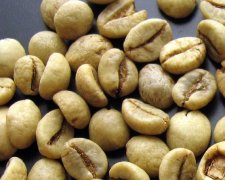
Robusta's secret.
[guide] "Robusta" coffee, commonly known as "thick beans", can be grown at low elevations (200 to 800 meters above sea level), has strong resistance to diseases and insect pests, is not vulnerable to agricultural pests, has a high annual output per unit area, and is harvested in large quantities by machine. in general, the cost of production is much lower than that of Arabica. "Robusta" coffee is commonly known as "stout beans", at low elevations (200 above sea level)
2015-11-13 Rob Booth unknown secret.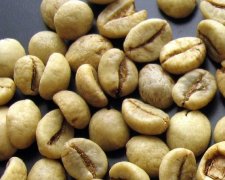
Robusta's secret.
[guide] "Robusta" coffee, commonly known as "thick beans", can be grown at low elevations (200 to 800 meters above sea level), has strong resistance to diseases and insect pests, is not vulnerable to agricultural pests, has a high annual output per unit area, and is harvested in large quantities by machine. in general, the cost of production is much lower than that of Arabica. "Robusta" coffee is commonly known as "stout beans", at low elevations (200 above sea level)
2015-11-13 Rob Booth unknown secret.
World Coffee Bean Certification What is Organic Coffee Bean? How to properly certify organic coffee beans?
Organic coffee is coffee grown without the use of synthetic pesticides, herbicides or chemical fertilizers. These ways of growing coffee help maintain a healthy environment and keep groundwater pure. After harvesting, be sure to use an organic certified roasting plant to process coffee beans. Organic coffee is coffee beans grown in the shade.
2016-01-04 world coffee beans certified what organic how right coffee is in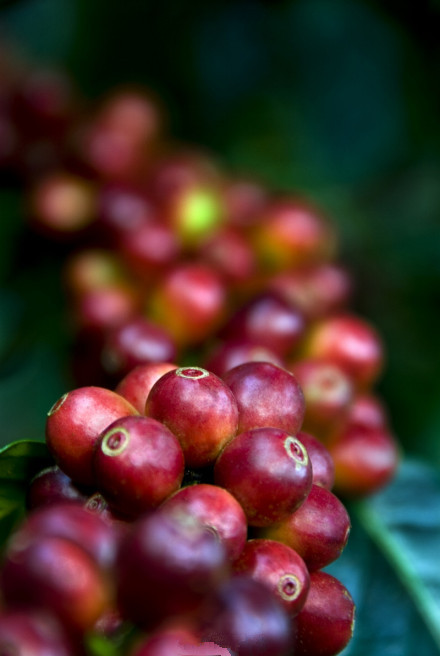
Scientists find Achilles' heel of coffee fruit beetle
A new study published in Nature Communications on July 14 shows that coffee fruit beetles, a harmful coffee pest, break down caffeine through intestinal flora, according to a new study published in Nature Communications on July 14. Without these intestinal flora, caffeine is toxic to coffee bark beetles, and this newly discovered intestinal flora may provide new strategies to help control the pest. Coffee fruit
2015-07-21 Scientists found that coffee small fruit fatal weakness the world agrochemical Chinese website newspaper
The coffee producing area of Tanzania
Due to political instability and rampant diseases and insect pests, the coffee industry in Tanzania has been damaged, leading to a decline in the overall level of coffee and instability in quality, which in turn lead to lower prices, which are usually the result of a further decline in the coffee industry. What's more, it is estimated that more than 12% of the Arabica coffee grown in northern Tanzania from 1969 to 1985 was smuggled.
2015-02-16 Global coffee origin Tanzania due to political instability coupled with diseases and insect pests
Java coffee flavor Java coffee characteristics
Among the Asian coffee-producing countries, Indonesia is a very noteworthy one. Indonesia is an island country in the Indian Ocean, the islands are distributed on both sides of the equatorial line, of which three islands: Java, Sumatra and Sulawesi produce the world's important coffee. In the mid-17th century, the Dutch brought coffee trees to Ceylon (Sri Lanka) and Java, Indonesia. India in the 18th century
2016-08-29 Java coffee flavor specialty
CBB pest found in coffee trees in Hawaii
Coffee berry borer is in the red area of the Big Island (red part). Photo: CBB translated by the Department of Agriculture of Hawaii (HDOA) confirmed on May 12, 2011: coffee pulp borer (CBB) pest (in Pahala in the Ka`u District of the Big Island) was found on a farm in Ka`u District, Hawaii Island. Ka`u is a coffee growing area, which is currently
2015-10-07 Coffee Hawaii Discovery Berry CBB Pest Big Island Restaurant
Characteristics of Tanzanian coffee flavor of Tanzania coffee
Due to political instability and rampant diseases and insect pests, the coffee industry in Tanzania has been damaged, leading to a decline in the overall level of coffee and instability in quality, which in turn lead to lower prices, which are usually the result of a further decline in the coffee industry. What's more, it is estimated that more than 12% of the Arabica coffee grown in northern Tanzania from 1969 to 1985 has gone.
2016-08-30 Tanzania coffee characteristics flavor due to political situation instability coupled with diseases and insect pests
Indonesia Java Coffee Flavor description Variety characteristics of High-quality Coffee beans
Java produces only a small amount of Arabica beans, most of which were imported from Africa after the rust disaster. This coffee has a strong bitter taste after roasting, but the aroma is extremely light. Although the acidity is low and the taste is delicate, it is rarely used for direct drinking. It is often used to mix mixed coffee or to make instant coffee. Diseases and insect pests are really a powerful thing, it makes Pakistan
2016-09-29 Indonesia Java coffee flavor description variety producing area characteristics boutique
Coffee tree species
Coffee species Coffee trees can be divided into two main varieties: Arabica (Arabica) and Robusta (Robusta). There are also some minor species, such as the Liberian species (Liberica) and the Alabasta species (Arabusta), but they are rare on the market. Although Arabica and Roberta are widely cultivated, there are significant differences between them.
2016-05-31 Coffee type variety
The light flavor of Java coffee describes the treatment method of grinding degree and the degree of baking in the manor area.
Java produces only a small amount of Arabica beans, most of which were imported from Africa after the rust disaster. This coffee has a strong bitter taste after roasting, but the aroma is extremely light. Although the acidity is low and the taste is delicate, it is rarely used for direct drinking. It is often used to mix mixed coffee or to make instant coffee. Diseases and insect pests are really a powerful thing, it makes Pakistan
2016-10-08 Light fragrant Java coffee flavor description grinding treatment method
What are the coffee beans for fine coffee learning?
Seed selection is a very important factor in crop cultivation. Agricultural scientists are studying better and higher yield varieties of wheat, soybeans and corn every year. They are also studying how to make apples taste better and more beautiful and resistant to pests and diseases. In fact, coffee is the same. The quality and taste of coffee are determined by the quality of varieties. The industry generally divides coffee trees into three categories: Arabica
2014-11-19 Coffee knowledge Fine coffee learning Coffee beans